
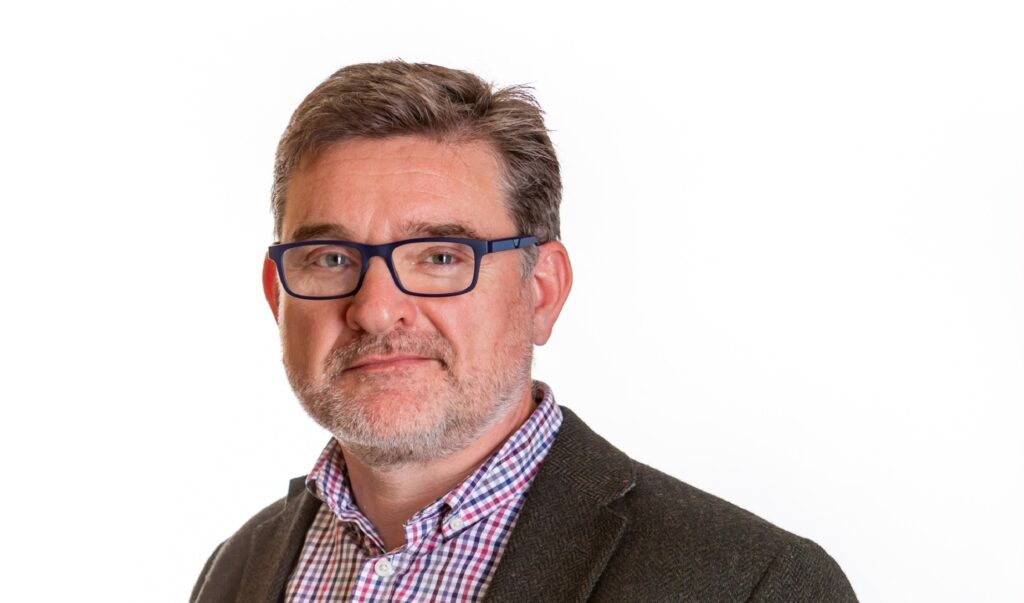
With over 35 years business experience, Rob Nicoll joined Grassroots as Innovation Director in June 2025. Reflecting on his first six months in the role, here Rob shares an insight into how his knowledge and expertise now helps small businesses and start-ups at Grassroots as they navigate the ups and downs of building, growing, and potentially selling, a business…
Tell us a bit about your background. What has shaped your career path?
I’m freshwater microbiologist by training but when I graduated in 1989 there really wasn’t a great demand for freshwater microbiologists in the UK, so stumbled into water safety within the built environment. In the early 90’s I worked for a very large American corporate and it just drove me insane. I just felt like I was on a treadmill, so I resigned. At the time, the US was a lot more advanced in terms of technology. I realised there was an opportunity to use technology to transform how water safety data was handled within organisations, so whilst working as a consultant to pay the bills, I developed my own software business, which provided software to manage water quality. My first customer was Queen Elizabeth Hospital in Welwyn Garden City.
What attracted you to the role at Grassroots?
From starting my own business, I quickly realised that I just loved start-up businesses, where you have to turn your hand to everything. Now I get such a buzz from working with small businesses and the energy that’s around them and firmly believe that they are fundamental to a country’s success. I don’t think politicians understand this, they don’t come from that background and so anything I can do to help small businesses to succeed is very satisfying. If I can impart just a little of what I have learnt over three decades, then that would be a great achievement.
Were you already familiar with innovation centres?
It actually feels like I’ve gone full circle because my first business was based at Heyford Park Innovation Centre, which like Grassroots, is also managed by Oxford Innovation Space. I started my first business when I was 29, with three children under five and no money. It’s fair to say that my wife was not overly pleased when I resigned from my corporate role. But after operating from a converted stable on a farm, we took a space at Heyford Park which gave us a much more of a professional presence, with a receptionist, meeting rooms and the ability to grow within the space. We were there for around seven years and started off occupying one room and eventually occupied half of one of the buildings upstairs. I know what it’s like to take the plunge into running your own business, the highs, the lows, and everything in between.
How would you describe Grassroots in one sentence?
It’s an inspiring place to be – a great facility that’s uplifting and aesthetically pleasing, where you’re surrounded by like-minded individuals who are on the same journey, which is really powerful.
How does Grassroots fit into the wider innovation ecosystem?
Grassroots is like a reservoir that’s surrounded by hills and streams that feed into the reservoir, feeding the ecosystem. It’s so much bigger than you first think, in terms of the businesses based at the centre, the wider Oxford innovation ecosystem, as well as the support from the other 30+ centres managed by Oxford Innovation Space (OI) throughout the UK and Ireland. I can call upon many other Innovation Directors within the OI ecosystem – between us we have very broad skill set as well as our own contacts, which opens up a network of several hundred of people. The waiting list here at Grassroots certainly tells us that we are doing something right.
What is the role of an Innovation Director at the centres?
Running a business can be lonely and full of challenges. My role is to support businesses from their inception to when they are too big to be here. The beauty of this role is that I’m not financially invested, I’m a sounding board – an independent non-judgmental critical friend. I am not a lawyer, or an accountant, or a marketeer, but I do have a lot of lived experience and have fallen down a lot of holes. We can steer people in the right direction, point out the bear traps and generally support.
What are your core areas of expertise?
Over the years I’ve headed up a lot of sales teams. I’ve got a good radar when it comes to selling and so I can help organisations with that. Over the last six years I’ve also spent a lot of time acquiring businesses and I’ve sold several businesses. In my non-exec director roles, I still get involved in acquiring businesses and so I’ve got a good insight into what selling and buying looks like.
How are wider economic and policy changes shaping the advice you give founders today?
It is currently difficult to get investment, especially before you start to trade. My advice is to start selling as soon as possible. Start ticking over some income. Build the client base. Get accounts filed early and show revenue if you can.
Would you say getting investment is the biggest challenge innovation companies are facing?
Yes, those funded by grants and research-based investment are struggling to get the next round of funding. Hence my comment about speed to market. Pre-revenue investment is difficult at the moment. Whether it’s high-net worth individuals or VCs, their risk appetite has changed, they are currently more risk adverse. That said, it always goes cycles and also for the right idea there will always be money.
Where are you seeing the clearest opportunities for new ventures?
Undoubtedly, it’s technology focussed businesses because the speed to market is so fast – it’s quite incredible how AI has impacted technology-based businesses. You can build and launch something incredibly quickly. We are a great innovative nation; it’s a great place to be.
What are the top four pieces of advice you’d give an entrepreneur just starting out?
- Be your own person – you can get a lot of advice from people who have invested in you and those that have not, and they can sway you. You must remember that they invested in YOU for your ideas and skills. You are closer to your customers, so being your own person is very important.
- Get professional advisers you can trust – it doesn’t have to costs a fortune. The right advisers will want to go on your journey and make some exceptions for cash flow in the early days. Make sure the share structure is right, your articles are correct, you have shareholder agreement that work – all these things mean nothing in the early days but 15 years down the line, especially if you want to sell it, are critical.
- Build a talented team around you – apart from anything else it means you can go on holiday! Building a team, incentivising the team is absolutely on the critical path.
- Enjoy the ride – If it fails it fails. The downs may feel like the end of the world at the time, but they never are. It may feel like the world will collapse, but it doesn’t.
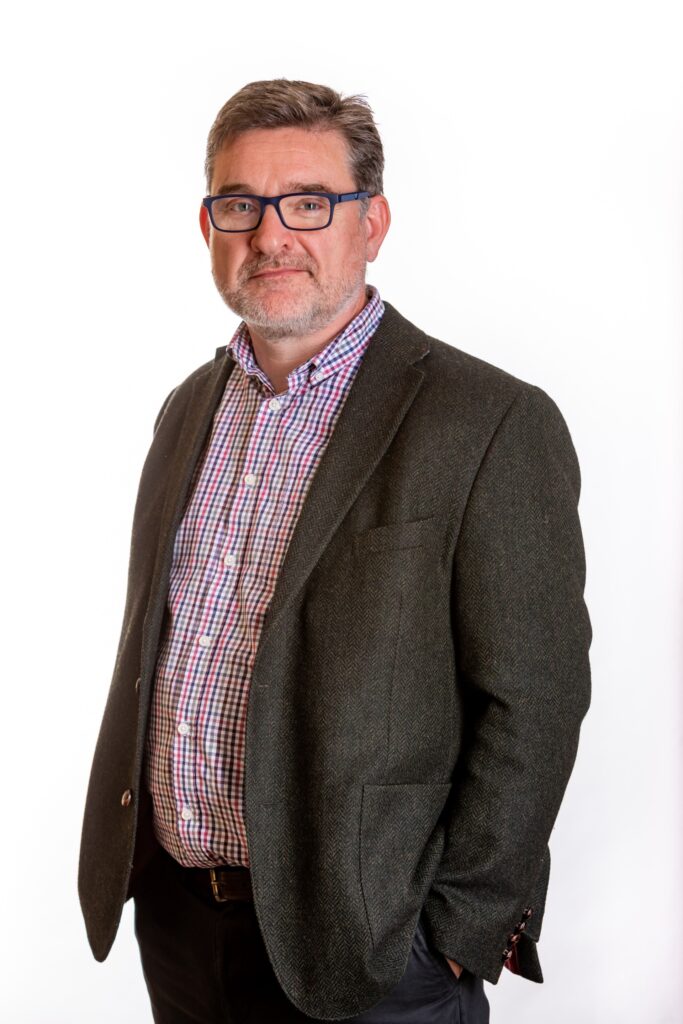
Rob is based in Grassroots on a Tuesdays and Thursdays.
You can contact Rob below or look out for him by the coffee machine!
Email rnicoll@oxin.co.uk
Mobile 07931 542310
The Wire